As a leading waste management expert in Australia, We've compiled the ultimate guide to liquid waste management services. Learn about regulations, types of waste, disposal methods, and how to choose the right provider for your home or business.
The Ultimate Guide to Liquid Waste Management Services in Australia
Hello, fellow Australians! As an expert in waste management and recycling, We are here to demystify one of the most critical and often overlooked aspects of our environmental responsibility: liquid waste. From industrial processes to commercial kitchens and even our own households, managing liquid waste correctly is not just about compliance—it's about protecting our unique ecosystems and ensuring a sustainable future.
Free Quote & Audit
Under no obligation
This comprehensive guide will explore everything you need to know about liquid waste management services, from the different types of waste to the disposal methods and the regulations that govern them here in Australia. Let's dive in.
1. What Exactly is Liquid Waste?
Liquid waste is any waste material that is in liquid form. This can range from the seemingly harmless to the highly hazardous. It's not just what comes out of your tap or kitchen sink; it's a broad category that includes wastewater, sludge, chemicals, and oils from various sources.
2. The Importance of Proper Liquid Waste Management Services
Improper disposal of liquid waste can have catastrophic consequences for our environment and public health. Pouring harmful substances down the drain can contaminate groundwater and waterways, harming wildlife and disrupting delicate ecosystems. Professional liquid waste management services ensure these materials are handled safely, treated properly, and disposed of in an environmentally sound manner, adhering to strict regulations.
3. The Australian Regulatory Landscape for Liquid Waste
Australia has a robust framework of federal, state, and territory laws governing liquid waste. The Environmental Protection and Biodiversity Conservation Act 1999 (EPBC Act) is the overarching federal legislation, but each state also has its own specific regulations. For example, in New South Wales, the EPA (Environment Protection Authority) sets guidelines for businesses that generate liquid waste.
State-specific regulations: Each state and territory has its own EPA or similar body that issues licenses and sets specific rules.
Compliance is mandatory: Businesses are legally required to manage their liquid waste in a way that protects the environment and community.
Penalties for non-compliance: Non-adherence to regulations can result in significant fines and legal action.
4. Types of Liquid Waste Handled by Management Services
Liquid waste is categorised based on its source and composition. A professional liquid waste management services provider will have the expertise to handle a wide range of materials.
Commercial & Industrial Waste: This includes wastewater from manufacturing, chemical residues, coolants, and contaminated storm water.
Grease Trap Waste: A common issue for restaurants and food businesses. This waste consists of fats, oils, and grease (FOG).
Septic and Sewage Waste: Waste from residential and commercial septic tanks and holding tanks that lack drainage.
Oily Water and Hydrocarbon Waste: Run-off and residues from car washes, workshops, and industrial sites.
Medical Liquid Waste: Bodily fluids, blood, and other biological matter from hospitals, clinics, and laboratories.
Hazardous Liquid Waste: This category includes corrosive, flammable, and toxic materials like acids, solvents, and certain chemicals.
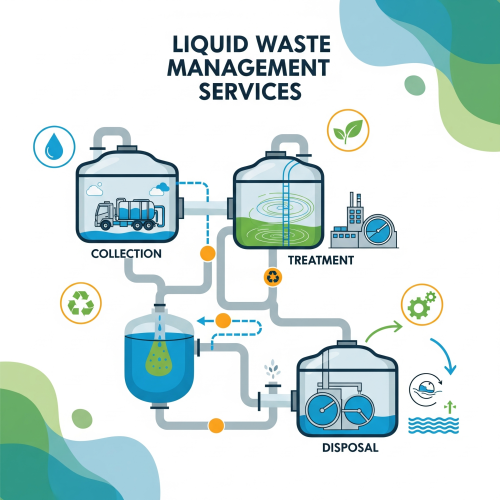
5. How Liquid Waste is Professionally Managed and Treated
The process of managing liquid waste is a complex, multi-step operation. It's far more than just "taking it away."
Collection and Transport: Licensed vacuum tankers and specialised trucks are used to safely collect liquid waste from a site.
Testing and Classification: The waste is tested to determine its exact composition and is classified according to regulatory standards (e.g., J100 and J120 wastes for mineral and hydrocarbon oils).
Treatment: Depending on the type of waste, it undergoes various treatment processes. This can include:
Dewatering: Removing liquid from solid waste.
Sedimentation: Separating solids from liquids using gravity.
Incineration: High-temperature burning for hazardous materials.
Disposal or Repurposing: The treated liquid and any remaining solid material are disposed of at an EPA-approved facility or repurposed. For instance, some oily water waste can be turned into biogas.
6. Choosing the Right Liquid Waste Management Services Provider
Selecting the right partner is crucial for both compliance and sustainability. Don't just go with the cheapest option. Here's what to look for:
Licensing and Accreditation: Ensure the company is fully licensed by the relevant EPA and holds industry-specific accreditations (like ISO 14001).
Expertise and Experience: Look for a provider with a proven track record in your specific industry.
Comprehensive Services: A good provider offers a complete "cradle-to-grave" solution, from collection to treatment and reporting.
Transparent Reporting: They should provide detailed documentation and waste reports to prove compliance.
Environmental Commitment: Partner with a company that prioritises resource recovery and sustainable practices.
7. The Role of Technology in Modern Liquid Waste Management
Innovative technology is transforming the industry. Data-driven systems and state-of-the-art facilities allow for more efficient, cost-effective, and sustainable solutions. Look for a provider who invests in:
GPS-tracked fleets: For efficient and timely service.
Waste stream monitoring: To provide real-time data on your waste generation.
Advanced treatment plants: Using modern techniques to maximise resource recovery.
8. Costs of Liquid Waste Management Services
The cost can vary significantly based on several factors. It's important to get a tailored quote.
Type of Waste: Hazardous waste costs more to treat than non-hazardous waste.
Volume: The amount of waste dictates the size of the vacuum tanker and the overall service fee.
Location: Distance to the nearest treatment facility can influence transport fees.
Service Frequency: Regularly scheduled services may be eligible for discounted rates.
9. Actionable Tips for Reducing Your Liquid Waste
Prevention is always better than cure. Here are some simple steps to reduce the amount of liquid waste your business or household generates.
Install Grease Traps: For commercial kitchens, a well-maintained grease trap is non-negotiable.
Review Your Processes: Conduct a waste audit to identify where liquid waste is being created.
Use Eco-Friendly Products: Opt for non-toxic cleaning agents and chemicals that are less harmful to the environment.
Minimise Water Use: Implement water-saving measures to reduce the volume of wastewater.
10. Frequently Asked Questions (FAQs)
What is the difference between liquid waste and solid waste?
Liquid waste is any waste in a liquid state, from sludge to chemicals. Solid waste is any non-liquid, non-gas material, such as household rubbish, paper, and plastic.
Is it legal to dispose of my own liquid waste?
No. For most types of liquid waste, especially commercial and hazardous waste, it is illegal and highly dangerous to dispose of it yourself. You must use a licensed professional to ensure proper handling and disposal.
How often should I have my grease trap cleaned?
The frequency depends on your business's activity level and the size of the trap. Typically, food businesses need cleaning every 1-3 months to prevent blockages and foul odours.
What happens to the liquid waste once it’s collected?
It is transported to an EPA-approved treatment facility. The waste is then processed, treated, and either disposed of safely or repurposed into a new product, like recycled water or biofuel.
How do I know if a liquid waste management company is reputable?
Check for their EPA licenses, read customer testimonials, and ask for references. A reputable company will be transparent about its processes, facilities, and commitment to environmental compliance.
11. Liquid Waste Management Services for Specific Industries
Different industries have unique liquid waste challenges.
Manufacturing: Handling coolants, lubricants, and chemical by-products.
Hospitality: Managing grease trap waste, cooking oils, and wastewater.
Construction: Disposing of concrete slurry, drilling mud, and contaminated water.
Healthcare: Safely removing medical and pharmaceutical liquid waste.
12. Case Study: The Benefits of a Tailored Service
Let's imagine a mid-sized food processing plant in Melbourne. They were struggling with high grease trap cleaning costs and non-compliance fines. By partnering with a leading liquid waste management services provider, they implemented:
A new grease trap maintenance schedule.
Installation of a pre-treatment system.
Regular waste audits.
This led to a 25% reduction in disposal costs and full compliance with local regulations, proving that a customised plan is key.
13. The Future of Liquid Waste Management in Australia
The industry is moving towards a circular economy model. This means a greater focus on:
Resource recovery: Turning waste into energy or new products.
Waste minimisation: Helping businesses reduce waste at the source.
Innovative technologies: Using advanced sensors and data analytics to optimise processes.
14. Regulatory Compliance: A Non-Negotiable Requirement
Staying compliant is not just about avoiding fines. It protects your business's reputation and ensures you are a responsible corporate citizen. Professional liquid waste management services handle all the necessary paperwork and reporting, making compliance easy for you.
15. The Health and Safety Aspects
Liquid waste can be a major health hazard. Professional services use specialised equipment and trained personnel to prevent spills and exposure to harmful substances. This protects your employees, your site, and the wider community.
16. The Environmental Impact: More Than Just Pollution
Beyond direct contamination, improper liquid waste disposal contributes to greenhouse gas emissions and the depletion of natural resources. By choosing a sustainable provider, you are actively participating in protecting our planet.
17. The Convenience Factor
Partnering with a professional service takes the stress out of liquid waste management. They handle everything from scheduling to reporting, allowing you to focus on your core business.
18. Local vs. National Providers
There are benefits to both. A local provider may offer a more personalised service and a deeper understanding of regional regulations. A national provider can offer more extensive resources and a broader range of services. The key is to find one that fits your specific needs.
19. Summary: Why Liquid Waste Management Services are a Must
In short, professional liquid waste management services are essential for:
Compliance: Adhering to strict Australian laws.
Environmental Protection: Safeguarding our land and water.
Cost-Effectiveness: Preventing costly fines and optimising waste streams.
Peace of Mind: Knowing your waste is being handled safely and responsibly.
20. Call to Action
Ready to take control of your liquid waste? Don't wait until it becomes a problem. Contact us, a licensed and reputable liquid waste management services provider today for a free waste audit and a tailored quote. Let's work together to make Australia a cleaner, greener place for generations to come.