Hazardous Waste Disposal in Sydney & NSW
Safe, compliant, fully WasteLocate-tracked collection and disposal of solid, liquid, and gaseous hazardous waste — chemicals, biomedical waste, asbestos, batteries, e-waste, contaminated soil, and industrial by-products. Bin, drum, IBC, and bulk collection available. No lock-in contracts.
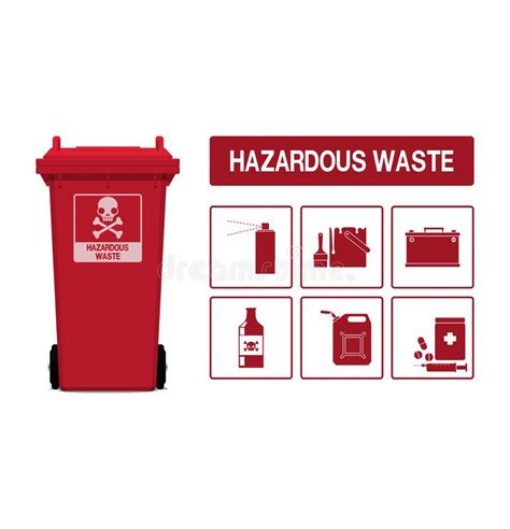
Licensed hazardous waste collection — documented from pick-up to final disposal
What Is Hazardous Waste Disposal?
Hazardous waste disposal is the safe, legal, and documented collection, transport, treatment, and destruction of waste that poses a risk to human health or the environment — whether it's solid, liquid, gaseous, corrosive, flammable, toxic, infectious, or radioactive in nature. In NSW, hazardous waste is regulated under the Protection of the Environment Operations Act 1997 (POEO Act) and the Waste Regulation 2014, and generators carry a non-transferable legal duty of care from the moment waste is generated until it reaches its final, lawful destination.
All commercial hazardous waste in NSW must be collected by an EPA-licensed contractor using appropriate containment (bins, drums, IBCs, or bulk vehicles), transported under the Australian Dangerous Goods Code where applicable, and tracked through the WasteLocate chain-of-custody system to a licensed treatment or disposal facility. Zero Waste Services manages the full process — classification, compliant collection, tracking, and documentation, across every hazardous waste stream.
⚠️ NSW Legal Requirement — Know Before You Move Hazardous Waste
Hazardous waste generators carry a strict, non-transferable duty of care under the POEO Act. Disposing of hazardous waste through an unlicensed contractor, to landfill, or to any drain, stormwater pit, or waterway is a strict-liability offence, with corporate penalties reaching $5,000,000. There is no requirement to prove intent. Call 1300 0WASTE before moving, storing, or disposing of any hazardous waste.
Hazardous Waste We Collect & Dispose
We handle solid, liquid, and gaseous hazardous waste across all commercial, industrial, and institutional sectors in NSW, ACT, and Victoria.
Chemical Waste
Solvents, acids, alkalis, oxidisers, and process chemicals in solid, liquid, or drummed form from manufacturing, cleaning, and laboratory operations.
Biomedical & Clinical Waste
Sharps, cytotoxic waste, pathological waste, and clinical waste from healthcare, dental, and veterinary practices. Regulated, incinerated pathway.
Asbestos Waste
Bonded and friable asbestos from demolition, renovation, and remediation work. Double-bagged, labelled, and disposed of at a licensed asbestos facility.
E-Waste & WEEE
End-of-life IT equipment, circuit boards, monitors, and electronic components containing heavy metals — recycled and recovered wherever possible.
Batteries & Electrolytes
Lead-acid, lithium-ion, nickel-cadmium, and mixed battery waste from vehicles, equipment, and consumer stock. Neutralisation and metal recovery arranged.
Oils, Fuels & Hydrocarbons
Used oil, contaminated fuel, hydraulic and coolant liquids, and oily rags or absorbents from workshops, transport, and manufacturing.
Contaminated Soil & Solids
Hydrocarbon- or heavy-metal-contaminated soil, filter media, and solid industrial residues from remediation and site works. Bulk bin or bulk tanker uplift.
Pesticides & Agrichemicals
Expired or off-spec pesticide, herbicide, and fertiliser concentrate, plus tank washings. High-temperature incineration arranged where required.
Gas Cylinders & Aerosols
Compressed gas cylinders, refrigerants, and pressurised aerosol waste requiring specialist depressurisation and disposal handling.
Pharmaceutical Waste
Expired medicines, cytotoxic and non-cytotoxic pharmaceutical waste, and controlled substances requiring specialist tracked destruction.
Low-Level Radioactive Waste
Smoke detectors, exit signs, and low-activity radioactive sources from commercial and institutional sites, handled under specialist licence.
Off-Spec & Expired Product
Off-spec batches, expired stock, and unsaleable hazardous chemical product requiring documented destruction.
Four Ways We Collect Hazardous Waste
The right containment and collection method depends on volume, waste class, and how your hazardous waste is currently stored on site.
Bin & Bag Collection
Sharps containers, clinical waste bins, and asbestos bags for regulated healthcare and demolition waste streams. Regular scheduled uplift available.
Drummed Collection
205L steel or poly drums for smaller volumes — lab clean-outs, workshop chemicals, and off-spec product. Bunded, labelled, and manifested individually.
IBC Collection
1000L intermediate bulk containers for medium-volume liquid or solid streams. Ideal for ongoing generators with regular hazardous waste output.
Bulk & Vacuum Tanker Uplift
For fixed tanks, sumps, contaminated soil stockpiles, or bulk-stored hazardous waste, our licensed vehicles collect directly — no manual handling required.
Hazardous Waste Disposal in 5 Steps
From your first contact to your final disposal certificate — Zero Waste Services manages every step of the process.
Contact & Describe Your Waste
Call 1300 0WASTE or complete our online quote form. Describe the waste type, volume, current containment, and site access. Safety Data Sheets (SDS) help but aren't essential at this stage.
Classification & Itemised Quote
We classify your waste under NSW EPA guidelines and recommend the right collection method — bin, drum, IBC, or bulk uplift. A transparent, itemised quote follows within 24 hours.
Licensed Collection
Our EPA-licensed vehicle collects from your site on the agreed date. Waste is contained, labelled, and packed to Australian Dangerous Goods Code standards where applicable.
WasteLocate Chain of Custody
Every regulated hazardous waste collection is tracked in NSW EPA's WasteLocate system — creating an unbroken electronic chain of custody from your site to the licensed facility.
Disposal Certificate Issued
After confirmed receipt at the licensed facility, you receive a disposal certificate and WasteLocate documentation — satisfying your 4-year EPA record-keeping obligation automatically.
Local Hazardous Waste Experts You Can Trust
With 70 years of combined industry expertise, our team knows exactly how to contain, transport, and dispose of hazardous waste without risk to your site or your compliance position.
EPA-Licensed Contractor
Fully licensed by the NSW EPA for hazardous waste collection, transport, and disposal across every waste class. Verifiable on the EPA public register at any time.
Full-Fleet Capability
Bins, drums, IBCs, and bulk vacuum tankers mean we match the right vehicle to your waste stream — removing manual handling risk wherever possible.
70 Years Combined Expertise
Our specialists have handled every hazardous waste challenge across every NSW industry sector — and know the most cost-effective compliant solution for your specific stream.
Complete Documentation
WasteLocate consignment notes, disposal certificates, and four-year electronic records provided automatically after every collection — your EPA compliance record is always current.
Emergency Response
Chemical spills, gas leaks, or uncontrolled hazardous waste incidents require immediate action. Zero Waste Services provides emergency response across Sydney metro.
Resource Recovery First
Before defaulting to incineration or landfill, we explore every recovery option — solvent distillation, acid neutralisation, metal and e-waste recovery.
Flexible Scheduling
Single collections or regular scheduled service — weekly, monthly, or on-call. We adapt to your waste generation rate, not a fixed contract schedule.
All Business Sizes
From a single drum of off-spec chemical to ongoing bulk uplift for large industrial operations — services scale to your volume and budget.
Duty of Care — What NSW Law Requires
NSW law places a non-transferable duty of care on every generator of hazardous waste — from the moment it's produced until it reaches a lawful, final destination.
- Correctly classify your hazardous waste before transport — classification is your obligation, not the contractor's
- Store hazardous waste in appropriate, segregated, and where required bunded containment
- Engage only EPA-licensed contractors whose licence covers your specific waste type
- Ensure waste reaches a facility licensed to receive your specific waste classification
- Verify WasteLocate consignment notes are initiated and completed for every regulated collection
- Retain all disposal certificates and WasteLocate records for a minimum of four years
- Never mix hazardous waste streams to reduce apparent classification — dilution is a separate offence
- Dispose of hazardous waste in general waste bins or send it to landfill without EPA approval
- Pour, tip, or discharge hazardous liquid waste into any stormwater drain or waterway — strict-liability offence, penalties up to $5M
- Mix hazardous waste streams to lower apparent hazard classification — illegal dilution under NSW Waste Regulation
- Use unlicensed contractors — you remain liable for the destination of your waste regardless of who collects it
- Store hazardous waste unlabelled, unsealed, or without appropriate segregation from incompatible materials
- Transport hazardous waste on your own vehicle without correct labelling and Dangerous Goods compliance
The Real Cost of Non-Compliant Hazardous Waste Disposal
NSW penalties for improper hazardous waste disposal are among the most significant in Australian environmental law — and directors can be held personally liable.
Hazardous Waste Disposal — Sydney Metro Rates
Pricing varies by waste type, volume, classification, and collection method. Rates below are indicative for Sydney Metro — contact us for a confirmed itemised quote.
Drummed Waste (205L)
From $3.50 per kg (disposal)Plus transport from $150 (metro, <2 pallets) and EPA WasteLocate tracking $25–$35. Includes drum supply, bunding, and labelling.
IBC / Bin Waste
POA per unit (disposal)IBC or clinical bin supply, containment, and collection for medium-volume streams. Transport and EPA tracking quoted per collection.
Bulk / Vacuum Tanker Uplift
POA per loadBulk pump-out or bin uplift for contaminated soil, tanks, sumps, or pits. Priced by volume, distance, and waste classification.
Emergency Response
POA call-out + disposalPriority emergency response for uncontrolled hazardous waste incidents — containment, uplift, and disposal coordinated in one call.
| Hazardous Waste Type | Hazard Class | Disposal (per kg) | EPA Tracking | Disposal Pathway |
|---|---|---|---|---|
| Chemical Waste (solvents, acids) | Flammable / Corrosive | From $3.50/kg | $25–$35 | Recovery / incineration / neutralisation |
| Biomedical / Clinical Waste | Infectious | POA | $25–$35 | High-temperature incineration |
| Asbestos (bonded / friable) | Fibrous | POA | $35 | Licensed asbestos landfill cell |
| E-Waste / WEEE | Toxic (heavy metals) | POA | $25 | Recycling / metal recovery |
| Batteries & Electrolytes | Corrosive | POA | $25 | Neutralisation / metal recovery |
| Used Oils & Contaminated Fuel | Flammable | $3.50/kg | $25 | Licensed fuel / oil facility |
| Contaminated Soil | Multiple classes | POA (bulk) | $35 | Treatment / licensed landfill |
| Gas Cylinders & Aerosols | Pressurised | POA | $25–$35 | Depressurisation / licensed facility |
POA = Price on Application based on characterisation and collection method. All prices are indicative for Sydney Metro. Transport from $150 for <2 pallets (metro). Final invoice includes disposal + transport + EPA WasteLocate levy. Contact us for a confirmed itemised quote.
Hazardous Waste Disposal Across Every NSW Industry
Zero Waste Services provides hazardous waste disposal for commercial, industrial, institutional, and residential clients across NSW, ACT, and Victoria.
Hazardous Waste Disposal Service Areas
Zero Waste Services collects hazardous waste across Greater Sydney, regional NSW, Canberra, and Melbourne — with offices in Bankstown, Canberra, and Melbourne CBD.
Frequently Asked Questions
What hazardous waste does Zero Waste Services collect?
We collect chemical waste, biomedical and clinical waste, asbestos, e-waste, batteries, used oils and fuels, contaminated soil, pesticides, gas cylinders, pharmaceutical waste, and low-level radioactive sources — in bins, drums, IBCs, or bulk. Call 1300 0WASTE for waste types not listed.
What's the difference between bin, drum, IBC, and bulk collection?
Bins and bags suit clinical and asbestos streams. Drums (205L) suit smaller volumes such as a lab clean-out. IBCs (1000L) suit medium, ongoing waste generation. Bulk or vacuum tanker collection is best for large volumes in fixed tanks, sumps, or stockpiles. We recommend the right method during your free quote assessment.
Can I put hazardous waste in general waste bins or landfill in NSW?
No. Sending hazardous waste to general waste or unlicensed landfill, or discharging it to stormwater, is a strict-liability offence under the POEO Act, with fines up to $5,000,000 for corporations. Hazardous waste must go to a facility specifically licensed to receive that waste classification.
Does Zero Waste Services provide documentation for every collection?
Yes. For every regulated hazardous waste collection, Zero Waste Services initiates and manages WasteLocate consignment notes, confirms transport details, obtains receipt confirmation from the licensed treatment facility, and provides you with a disposal certificate — supporting your four-year EPA record-keeping obligation.
How much does hazardous waste disposal cost in Sydney?
Pricing varies by waste type, volume, classification, and collection method. As a guide for Sydney Metro: drummed waste disposal from $3.50/kg plus transport from $150 (metro, less than two pallets) and EPA WasteLocate tracking $25–$35. IBC, bin, and bulk collections are priced on application based on volume and classification. Contact Zero Waste Services for a confirmed, itemised quote within 24 hours.
Can you respond to a hazardous waste spill or emergency?
Yes. Zero Waste Services provides emergency response and urgent hazardous waste uplift across Sydney. If you have a spill or incident, call 1300 0WASTE immediately. NSW law (POEO Act section 148) requires immediate notification to the EPA Environment Line (131 555, 24/7) if an incident may cause pollution — our team can guide you through both the emergency response and the mandatory notification process.
What happens to hazardous waste after Zero Waste Services collects it?
Hazardous waste is transported to licensed treatment facilities where it undergoes the most appropriate pathway: solvent recovery, acid or alkali neutralisation, high-temperature incineration, metal or e-waste recovery, licensed asbestos landfill, or co-processing as alternative fuel. Resource recovery is prioritised before disposal where technically and economically viable.
What areas does Zero Waste Services cover for hazardous waste disposal?
Zero Waste Services provides hazardous waste disposal across NSW (including all Greater Sydney LGAs, Western Sydney, Central Coast, Hunter Valley, Illawarra, Blue Mountains, and regional NSW), ACT (Canberra), and Victoria (Melbourne). Our offices are at Bankstown NSW, Canberra ACT, and Melbourne VIC. Hotline: 1300 0WASTE (1300 092 783).
Request Your Free Hazardous Waste Disposal Quote Today
EPA-licensed. WasteLocate-tracked. Fully documented. Bin, drum, IBC, or bulk collection. No lock-in. Response within 24 hours — across NSW, ACT, and Victoria.